Why I Gave Up the Button
The machine beat me to it. I had set the timer the night before, the way I had most nights for about two years, and when I came down at ten past six there was a full pot on the warmer with the little orange light glowing, and it had been sitting there since quarter to. It smelled like the inside of an old thermos. I poured a cup, drank half of it standing at the counter with my coat already on, and tipped the rest down the sink.
That was a Tuesday in February. I unplugged the machine that weekend and I have not really gone back.
What the button was actually saving me
I want to be honest about the arithmetic here, because I think it gets oversold in both directions. The machine saved me somewhere around eight minutes. Not thirty. Eight. I still had to fill the water, still had to put the grounds in, I just did it at nine at night instead of six in the morning. What I gained was not really time. It was the ability to walk into a kitchen and have something already be finished.
For a long stretch that felt like the entire point, and I would have defended it. Then I noticed that everything else in my first hour was also already finished, or already queued, or already waiting for me. The phone had things stacked up. The calendar had the day laid out before I got there. Nothing in the early part of my morning was being made. It was all being retrieved.
I am not calling that a crisis. Plenty of people press the button and have an excellent life and better mornings than mine. But I had this specific small problem where I could not have told you what I actually did between waking up and leaving the house, and I wanted at least one thing in there that I had done with my hands.
The first two weeks were worse
Worse in every way I could measure. The coffee was thinner. Twice it came out so bitter I could not finish it, which I now think was me leaving the water sitting in the grounds far too long because I had wandered off to find socks. Once I forgot I had started at all and came back to something cold and sad. I was slower out the door by a real margin, not eight minutes but closer to fifteen, because I had no sequence yet and kept opening drawers looking for things.
Nobody warns you that a slow method is not automatically a better one. It is just manual. Manual means you can get it wrong, and at the beginning you will, repeatedly. The machine I unplugged had been quietly absorbing a lot of small errors I did not know I was capable of making.
I nearly plugged it back in around day ten. What stopped me was stubbornness rather than conviction, which I think is true of most habits that stick.
Doing one thing at a time, badly
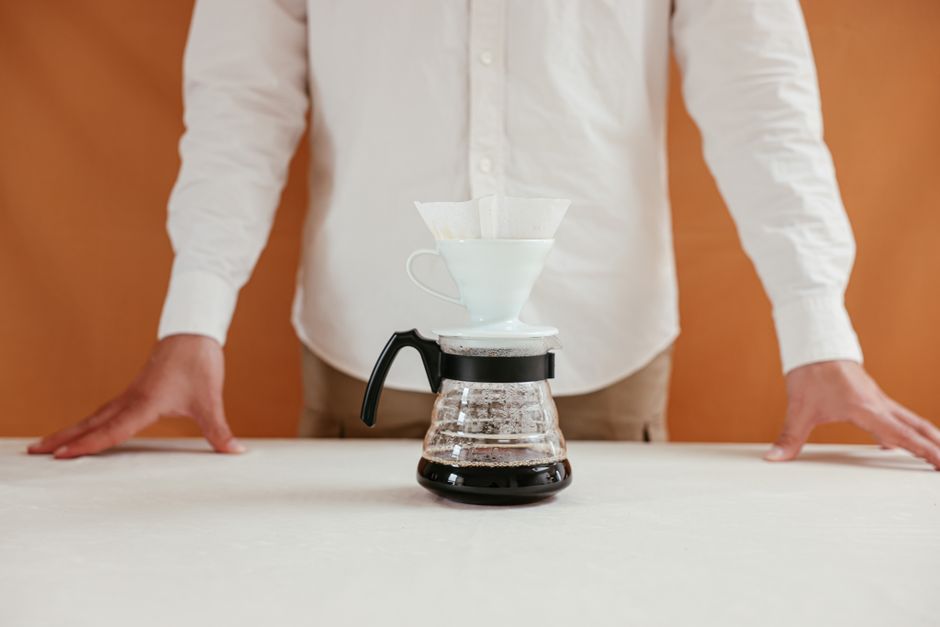
Somewhere in the third week it settled. Not because I got skilled at it, I want to be clear about that, I got a sequence. Water on. Grind. Rinse the mug out with the first of the hot water so the coffee does not land in something cold. Pour a little, wait, pour the rest. Same order every day, so my hands could run it while the rest of me was still offline.
What surprised me is that the waiting turned out to be the part that does something. There are maybe three minutes in the middle where there is genuinely nothing to do and nothing to look at except the kitchen window and whatever the weather is doing. I did not go looking for three empty minutes. I would never have put them in a calendar. They exist now because the coffee requires them, and I have come to lean on them more than on the coffee itself.
That is my honest answer for why I do it the long way. It is not flavour. I do get a better cup, but not dramatically better, and on a careless morning it is worse than the machine ever managed. The reason is the three minutes.
The mornings it does not work
There are plenty of them. If someone in the house is ill, if I slept badly, if I have to be somewhere at seven, the whole thing collapses and I have stopped fighting it. I have made instant standing up in January and felt absolutely nothing about it. I have skipped coffee entirely and been fine, mildly grumpy, but fine.
The failure I want to warn about is turning a small pleasant habit into an obligation, and then feeling like you have botched your own morning because you did not perform a chore correctly. That is a terrible trade. If I manage it four days out of seven, that is four more days than the machine was giving me, and the other three are not a debt.
The other failure, and I have done this many times: making it slowly while staring at your phone the entire time. The three minutes evaporate and you have simply spent longer making coffee for no return at all. Nothing about the method protects you from this. You have to physically leave the phone in another room, which is the boring unglamorous part of the whole business and the only part that actually matters.
What I would tell someone starting
Do not buy anything expensive first. Whatever cheap manual thing the shop down the road has is enough to find out whether you like the process, and if you turn out to dislike the process, a nicer version of it will not rescue you. I spent nothing for the first month and used something that had been sitting unloved in a cupboard since a house move.
Expect the coffee to be worse for a while and expect to be irritated by that. Give it three weeks rather than three days, because the first week is all fumbling and the second is when the sequence starts to hold on its own.
And do not throw the machine out immediately. Mine sat in a cabinet for four months before I passed it on, and knowing it was in there made the slow version much easier to keep, because I was choosing it rather than stuck with it. I do not think that is a small distinction. Most of what makes a morning feel decent is whether you picked it or it happened to you.