The First Thing I Do, Which Is Almost Nothing
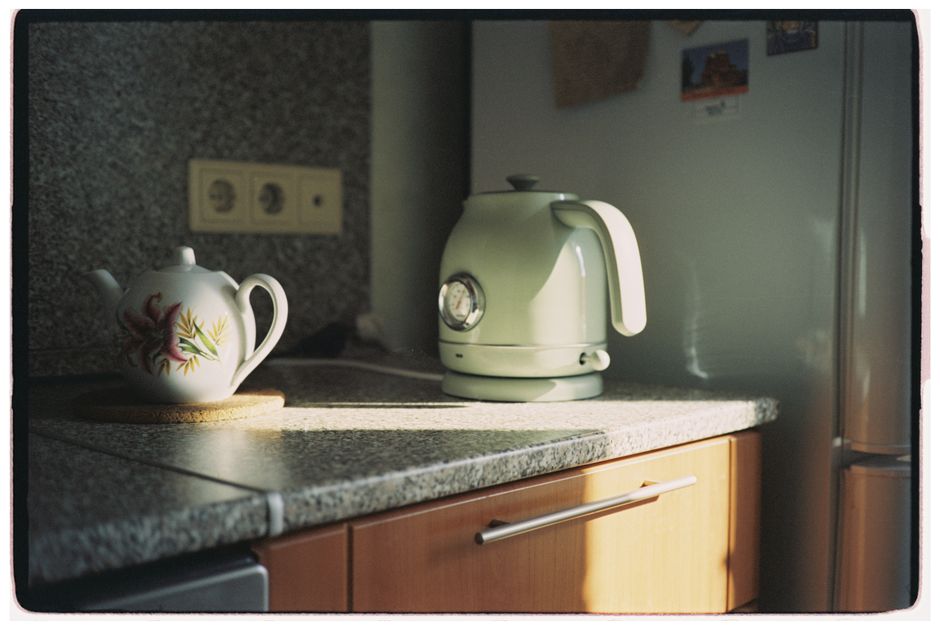
The radiator in the hallway starts ticking at about ten past six, a few minutes before any heat actually arrives in the room, and that is what wakes me more often than the alarm does. I lie there and listen to it for a minute. Then I get up, walk to the kitchen without turning on the overhead light, and fill the kettle. That is the first thing I do. It is not the meaningful part. It is just first.
The kettle goes on before I have an opinion
I noticed at some point that if the first four minutes contain a decision, the rest of the morning tilts. Choosing what to wear counts as a decision. Deciding whether to answer a message counts. Even choosing what to eat counts, which is one reason I have eaten more or less the same breakfast for two years and have stopped apologising for it. The kettle is useful because it asks nothing of me. I fill it, I press the switch, and then there are roughly three minutes in which the only available activity is standing there with one hand on the counter.
For a while I decided those three minutes were waste and tried to fill them. Wiping down the counter, putting away two plates from the night before, checking whether the plant on the sill needed water. All of that is fine, and the kitchen was tidier for a month. But I lost the specific thing I was after, which is a short stretch of not being useful to anyone, including myself. Now I let the kettle boil while I do nothing, and I should say that the doing nothing took practice. The first week of it felt like waiting for a bus.
What the first ten minutes seem to be for
My best guess is that the value is the absence of incoming information, not the coffee and not the light. Thoughts arrive in the wrong order early on. I will remember an unpaid invoice, then a sentence I got wrong in a conversation in February, then the fact that the kettle needs descaling. Given ten quiet minutes, those sort themselves into something like a list. Given a screen instead, they get buried under other people’s business and resurface later in the day at worse moments, usually while I am mid task and can do nothing about them.
I half tested this by accident. There was a week in spring when I had to be somewhere at seven every day and the morning version was impossible, so the only quiet stretch I got was around nine in the evening, in the same chair, with tea instead of coffee. It worked about as well. Slightly worse, because by nine at night I already knew everything that had gone wrong that day and the sorting had more to sort. But close enough that I no longer think mornings are special in themselves. Morning is just the part of my day that is reliably empty.
The order matters more than the contents
Kettle, then window, then grind, then pour. If I open the window first, the kitchen is cold while I stand waiting and I rush the standing, which defeats the whole thing. If I grind before the kettle is on, the timing goes wrong at the other end and the ground coffee sits there going flat. None of this is important and I am aware it sounds like superstition. It may well be superstition. I keep the order anyway, because keeping it costs nothing and breaking it produces a low grade irritation I would rather not carry into the next four hours.
Things I tried first and gave up on
Three pages of longhand writing lasted about five weeks. What I found was that I wrote about the same two worries every day in slightly different sentences, and reading them back made the worries feel larger and better documented rather than smaller. Stretching on the kitchen floor lasted maybe ten days, because I kept turning my head to check the clock, which is not stretching. Warm water with lemon lasted nine days and I stopped because I do not like it and could not build a reason to continue. A meditation app worked genuinely well for a month, and then it began sending a notification at 6:15 reminding me to be present. I found that funny for one day and then deleted it.
What survived is the smallest version. Boil water, open the window, make coffee, stand near the window and drink it. There is no part of this I could offer as a technique, because there is barely any technique in it.
What happens when I skip it
Nothing dramatic. I get through the day. What I notice is a shorter fuse before about eleven, and a tendency to answer messages in a clipped way that I sometimes have to soften an hour later. On skipped mornings I also eat lunch earlier, which I cannot explain and have stopped trying to. It is not a collapse and I do not want to describe it as one, partly because there have been entire months when none of this happened and I was still fine in the ways that matter, if grumpier than usual.
The part I would rather not skip over
This hour exists because of my schedule, not because of my character. I work from home three days a week, I start at nine, nobody expects anything from me before that, and I live alone in a flat where the loudest thing before seven is a radiator. No one needs feeding or dressing or finding a lost shoe. When I read a slow morning described as a choice available to anyone who wants it enough, I do not recognise my own situation in it, and the honest version has to say so out loud. What I have is not discipline. It is an empty hour that came with the job and the lease, and I happen to have found a way to spend it that I like.