How the Light Moves Through My Flat
At twenty to seven the light comes in low over the roof of the building opposite and lands on the kitchen floor in a strip about as wide as a tea towel. It moves. If I stand still and wait while the kettle boils, I can watch the edge of it creep across the tiles towards the fridge. By the time the coffee has dripped through it has crossed two grout lines.
I only know this because I spent a week last spring writing down where the light was. Not for any project. I had noticed that I was always slightly annoyed with my flat, and I could not work out why, and it turned out that I had arranged the whole place around an idea of the light that was about five years and one house out of date.
The first hour belongs to the kitchen
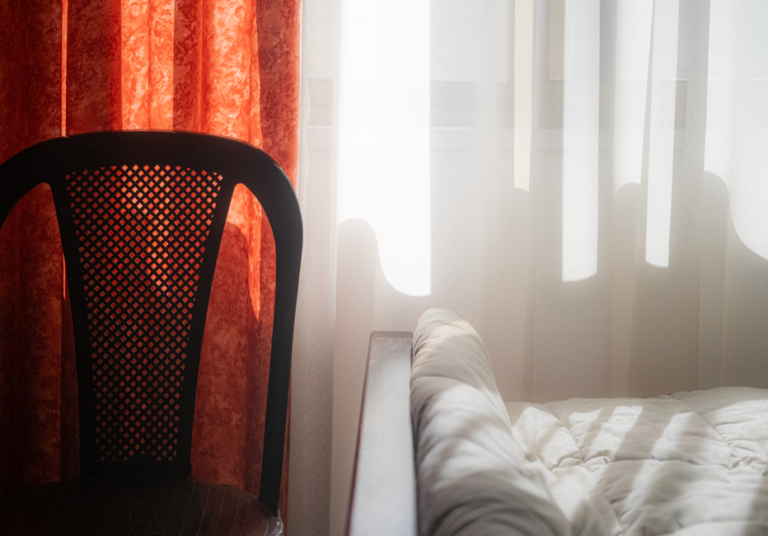
The kitchen is the only east-facing room I have and it gets roughly ninety minutes of direct sun in the morning before the sun climbs above the roofline opposite and the whole thing shuts off like a tap.
Ninety minutes is not much. For a long time I spent it in the other room, sitting at my desk with my back to the window, and then wondered why the flat felt dim. Now I do the slow parts of the morning in the kitchen: the coffee, the first emails, the standing about. The washing up has moved to the morning as well, entirely because the sink is in that strip of light for about twenty minutes and washing up in it is a different experience from washing up under the ceiling bulb at ten at night.
This is the single biggest thing I got out of that week. Not a purchase. Just moving my body to where the light already was.
Mid morning, the hallway does nothing
Between about nine and eleven there is a stretch where nothing much is happening anywhere. The kitchen has lost the sun. The front room has not got it yet. The hallway, which has no window at all, is exactly as dark as it is at midnight.
I used to feel this as a slump, as though the flat had gone flat. Naming it helped more than fixing it did. Now I know that the middle of the morning is the part of the day where the rooms are all evenly, mildly lit, and that this is fine for some things and useless for others. It is a good time to be at the desk. It is a bad time to try to photograph anything, or to decide what colour something is, or to sort through a drawer.
The hallway I have simply given up on. There is a lamp on a shelf there that stays on from morning to night. For a while I resented that. Now I think of it as a room that was always going to be a lamp room.
Noon is the flattest hour
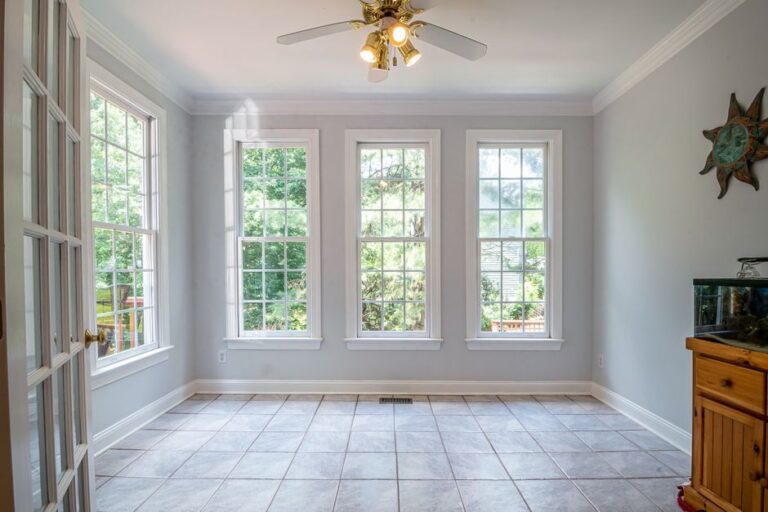
I had expected the middle of the day to be the best of it. It is not, at least not here. When the sun is high it comes almost straight down onto the roof and very little of it comes in through vertical glass. The rooms are bright in a general, shadowless way, and everything in them looks slightly less interesting than it did at eight in the morning.
What I notice at noon is texture disappearing. The weave on the sofa, the ridges on a linen napkin, the grain of the table: at eight there are tiny shadows in all of that and at one there are not. If I want to enjoy how something looks, noon is not the hour to look at it. If I want to see whether the floor needs sweeping, noon is exactly the hour.
Late afternoon is the back bedroom’s whole personality
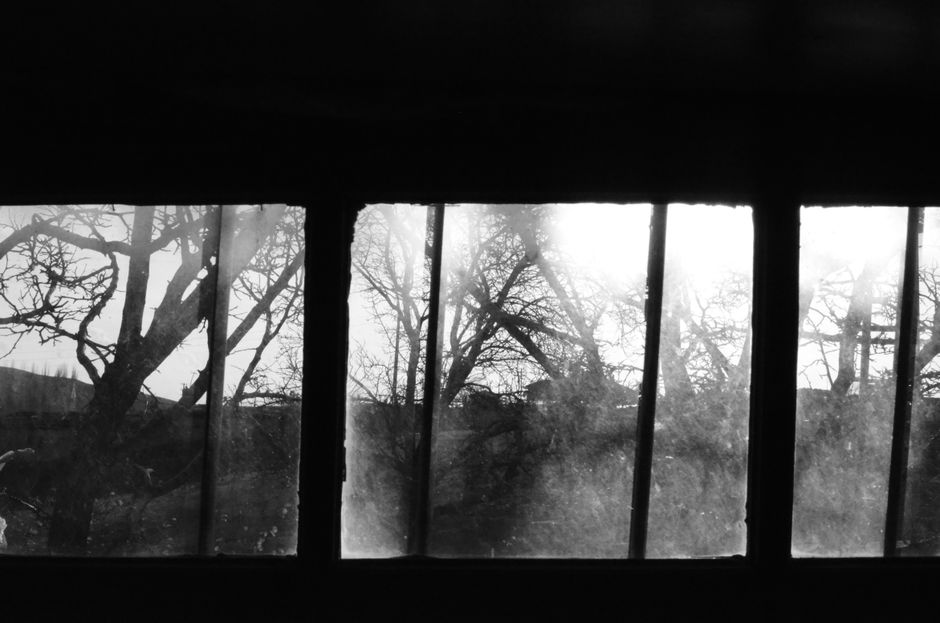
The back bedroom is the room I use least and it is the one that gets the best of the day. From about four until the sun goes behind the trees, it is warm and yellow and full of long shadows from the window bars, and it is genuinely the nicest room in the flat for about two hours.
I resisted this for a while because it seemed absurd to move my chair into the spare room every afternoon. Then I moved my chair into the spare room. I read in there now, most days, from four until the light goes. It has become the room I associate with the end of work, purely because of when the sun reaches it.
If you have a room you barely use, I would check what it looks like at the hour you are never in it. Mine had been quietly having the best afternoons in the flat for two years without me.
What I changed after the week
Very little of it cost anything. The desk turned side-on to the window so I am not looking into the brightest thing in the room. The reading chair migrated to the back bedroom for the afternoon and back again in the evening, which sounds fussy and takes eight seconds. The kitchen table got cleared, because it sits in the morning strip and having it covered in post was wasting the only direct sun the flat gets before nine.
I also stopped buying lamps to fix rooms. The hallway needs a lamp because it has no window. The front room does not need more lamps, it needs me to be in it at five rather than at eleven.
What I stopped trying to fix
The front room faces roughly north-west and gets no direct sun until late in the day, and in the winter it gets none at all. No arrangement of mirrors or pale cushions is going to change that. I have accepted that it is a lamp room from October to March and a lovely room in June, and that both of those are true about the same four walls.
Watching the light for a week did not make my flat brighter. It made me stop being annoyed with it. There is a version of every home where you are always in the wrong room at the wrong hour, and the fix is not the room, it is knowing the schedule.